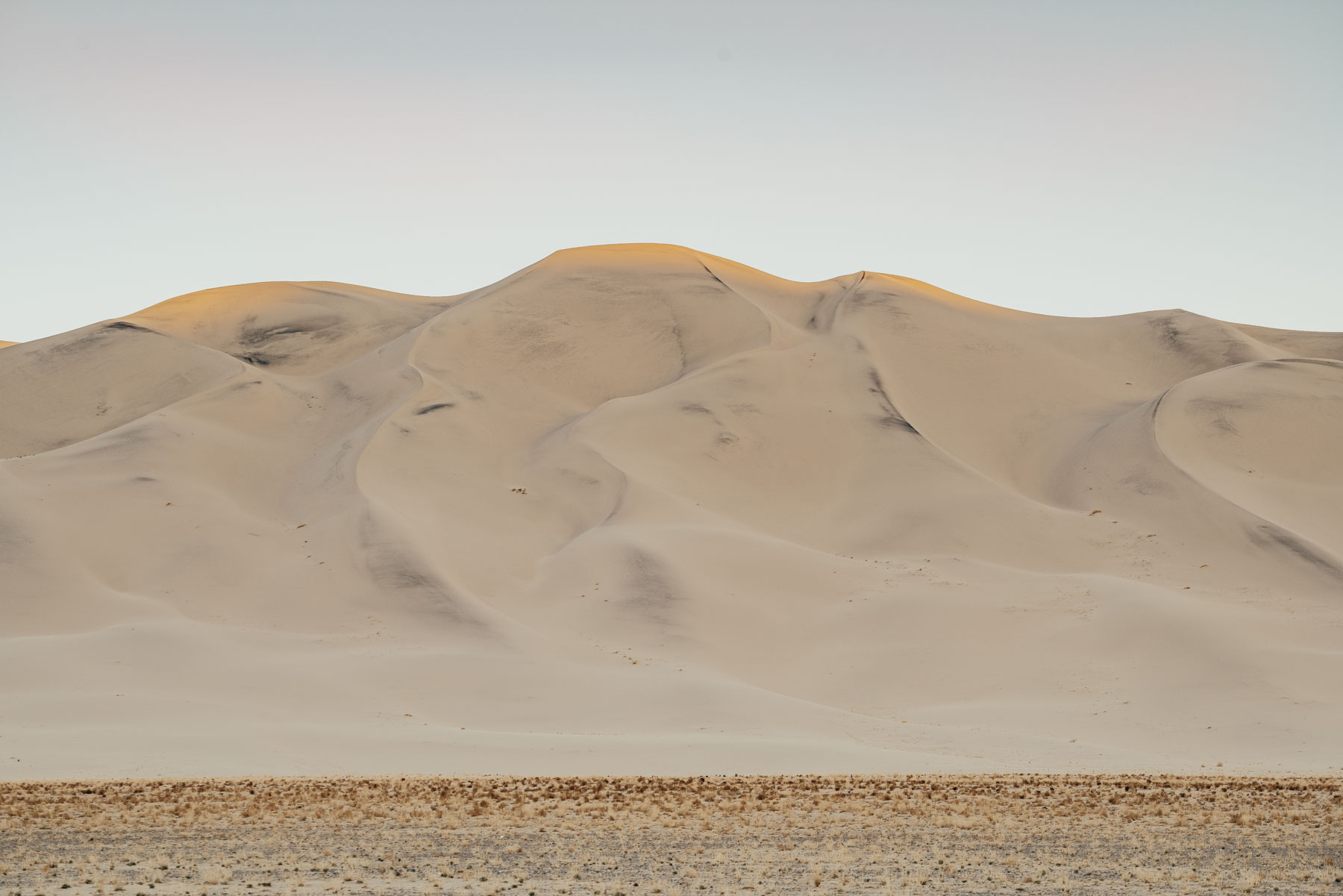
Arguably the tallest sand dunes in North America, visiting Eureka Dunes in Death Valley National Park is a must for any explorer.
During our whirlwind road trip through Death Valley, we visited all five dune fields in the park and Eureka Dunes easily stood out above the rest (both literally and figuratively).
The tallest dune in the field rises about 680 feet above the valley floor. To put that in perspective, that’s taller than a 60-story building. Standing at the base and looking up is genuinely humbling.
Read on for everything you need to know about Eureka Sand Dunes.
Eureka Dunes Tips
You will need 4WD to reach Eureka Dunes
- We recommend visiting only if you have 4WD, even though the national park service claims standard vehicles can access Eureka Dunes. Personally, we only saw 4WD cars in the parking lot. The road has deep washboard sections and loose gravel that would make any sedan driver nervous. For more on what to expect with a 4WD vehicle in the park, check out our guide to visiting Death Valley with 4WD.
Death Valley Entrance Fee
- The park entrance fee is $30 per vehicle as of 2026, valid for 7 days. An America the Beautiful annual pass ($80) works here too and is a smart buy if you’re visiting multiple parks.
Death Valley Guidebooks
- While planning for our trip, we spent weeks (seriously) scouring maps, reading guide books and perusing online forums. (P.S. This is by far the best guide book on Death Valley National Park, hands down).
Practice Leave No Trace
- If you’re unfamiliar with Leave No Trace, it’s a measure to be a good steward of the land. You can read about the seven principals of Leave No Trace here.
Temperature
- Death Valley National Park holds the world record as the hottest place on earththe heat is no joke. I suggest visiting the park between October and April for comfortable hiking temperatures.
You + Sunscreen = Best Friends (Forever)
- Harsh sun, folks – use sunscreen and apply frequently. Shade is hard to come by and it’s easy to get sunburned while playing in the park.
- I swear by this sunscreen, I discovered it in France and now buy it in bulk. You’ll never catch me without it!
Sand boarding is prohibited
- In an effort to protect delicate lifeforms, sand boarding is not allowed at Eureka Dunes. Same goes for off-roading, it’s prohibited. The dunes are home to several endemic species including the Eureka Dunes evening primrose and the Eureka dunegrass, both of which grow nowhere else on earth.
Cell service in the park is unreliable
- Make sure you’re well prepared in terms of gas, food and water while visiting Death Valley National Park. We were out of service 90% of the time. Download offline maps before you leave and let someone know your itinerary.
Hiking with pups
- Dogs are NOT allowed on trails, in wilderness or in buildings. Essentially, pups can only go where cars can go, and this isn’t the place to leave your cute pooch in the car.
Camping at Eureka Dunes
- The Eureka Dunes Dry Camp offers a great camping option at the base of the dunes for those eager to catch sunrise and sunset from this special spot. The campsite offers fire pits, picnic tables and one pit toilet. There’s no water or trash service here, so pack everything in and out. The campsites are free and first-come, first-served.
Best time of day to visit
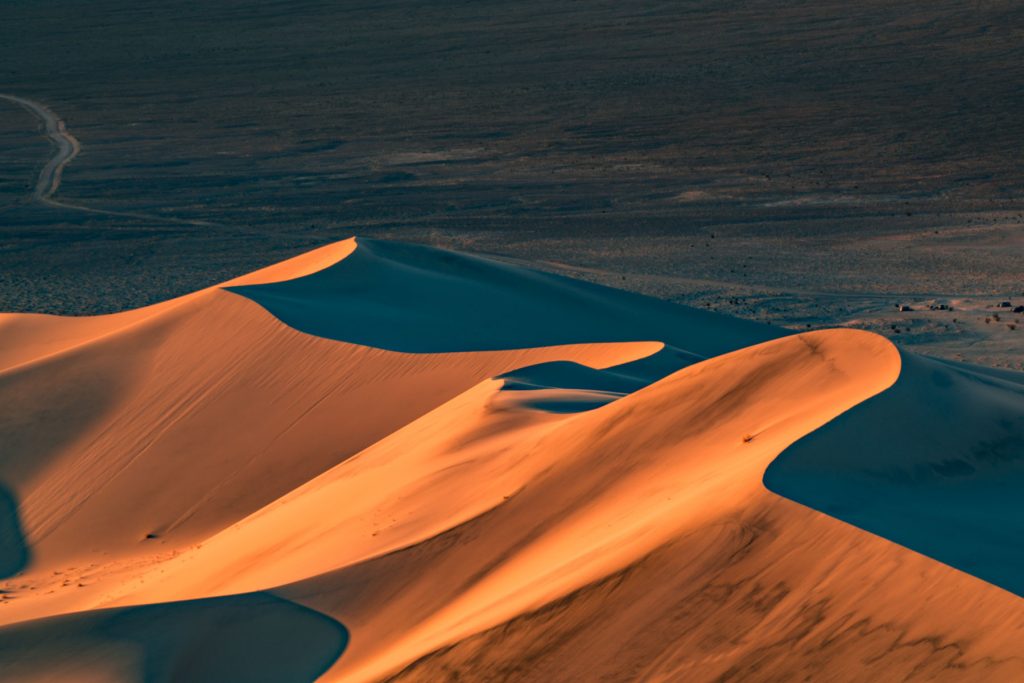
- Sunrise and sunset are the magic hours here. The low-angle light carves deep shadows into the dune ridges and turns the sand golden. If I had to pick one, I’d say sunset, but only because the light lasts a bit longer in the evening and gives you more time to enjoy the view from the top.
Getting to Eureka Sand Dunes
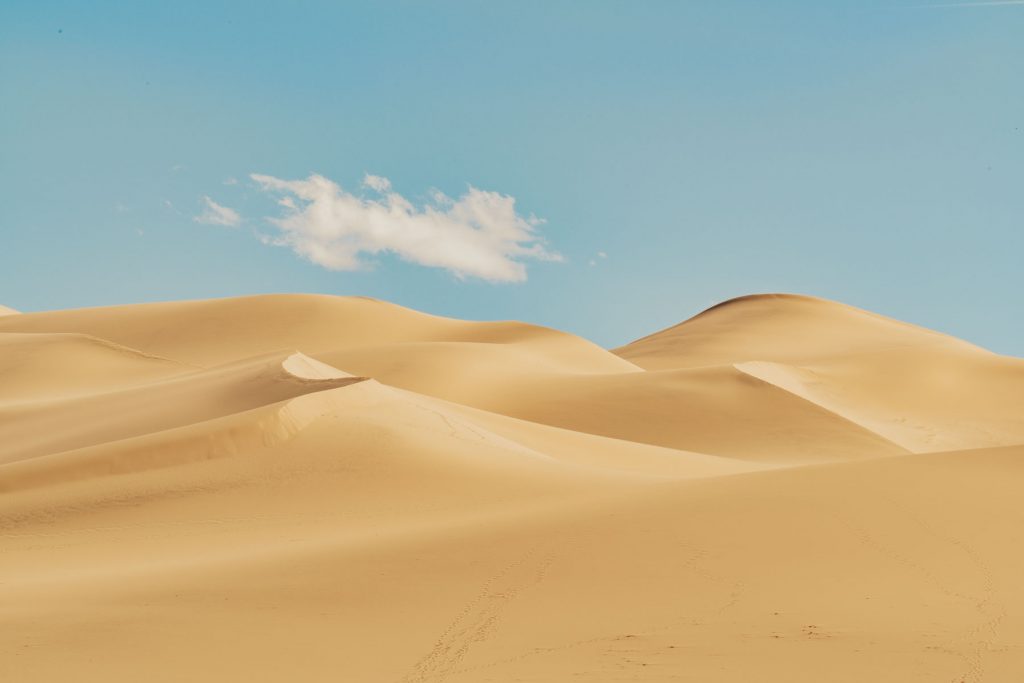
Eureka Dunes are located in the northernmost corner of Death Valley National Park, close to the California/Nevada border. The dunes lie in the heart of Eureka Valley and cover an area 3 miles long and one mile wide. This is the tallest sand dune field in California, and possibly North America.
Eureka Dunes is accessible via the Death Valley/Big Pine Road, the final 10 miles of the route takes you down the narrow South Eureka Road, which is a gravel road.
The drive from Furnace Creek takes about 3 hours each way, so plan on making this a full-day adventure. We left at sunrise to avoid driving in the dark on the rough roads and it was the right call. Fill your gas tank before heading out because there are no services anywhere near Eureka Valley.
Eureka Dunes Hike
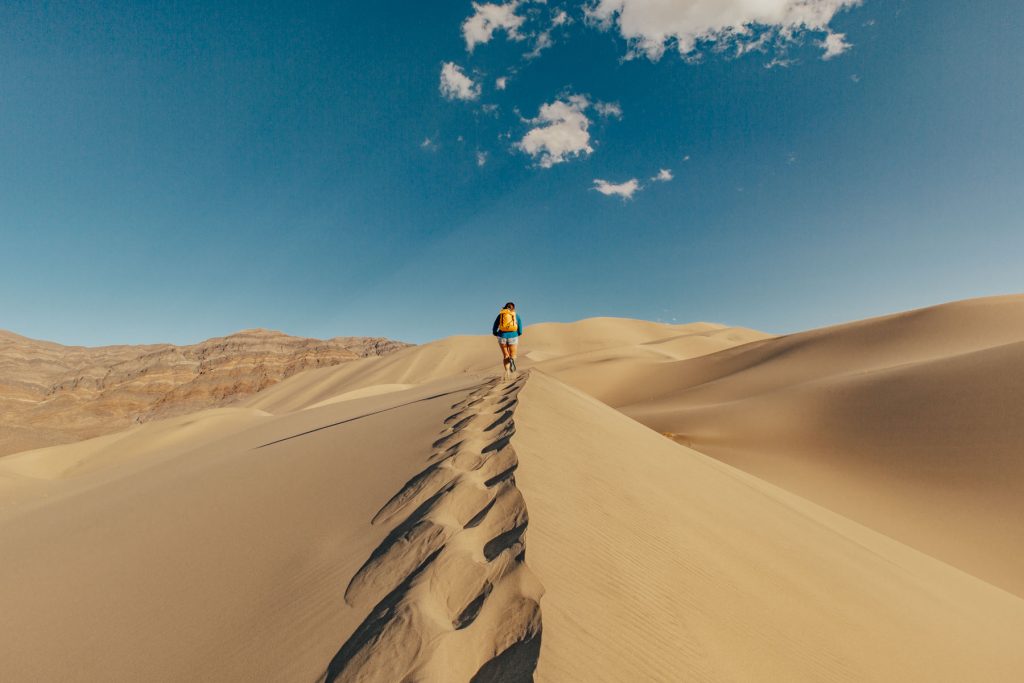
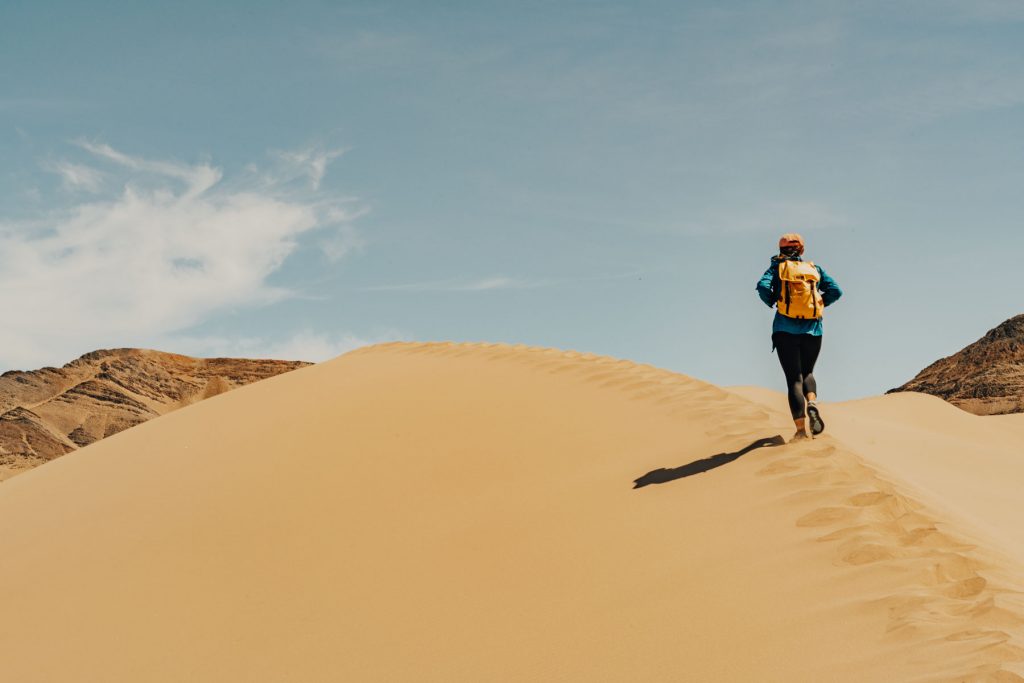
There’s no clear trail to follow, so upon parking your car, feel free to set out whichever direction you choose. I suggest aiming for the highest dune you see because the views are well worth it.
Will and I found ourselves fighting the clock because we wanted to catch sunset from the top – needless to say, we found ourselves on all fours at certain points.
Climbing the dune field is challenging because for every two steps you take, the loose sand sets you back one. However, the hike is well worth the effort because the views from the top are sensational.
Sweeping panoramic views as far as the eye can see, with the striking backdrop of the Last Chance Mountains looming overhead. What’s not to like?
The climb to the top of the tallest dune takes most people 45 minutes to an hour, depending on fitness level and how much you stop to catch your breath (we stopped a lot). Wear shoes you don’t mind getting filled with sand because it will happen. I went barefoot for part of the climb and would do it again. Just watch the sand temperature in warmer months.
What is a sand dune?
Like most people, when I think of the desert, I instantly think of never-ending sand dunes. But, would you be surprised to learn that only 1% of Death Valley National Park is covered in sand? The explanation is simple – conditions have to be perfect for sand dunes to exist.
First, there needs to be a source of sand and wind and a place for the sand to collect (such as washes and eroded canyons). Finally, there needs to be a geographic feature that traps the shifting sand – mountains! Thankfully, Death Valley is home to 5 areas that offer the perfect conditions for sand dunes, so you have some options!
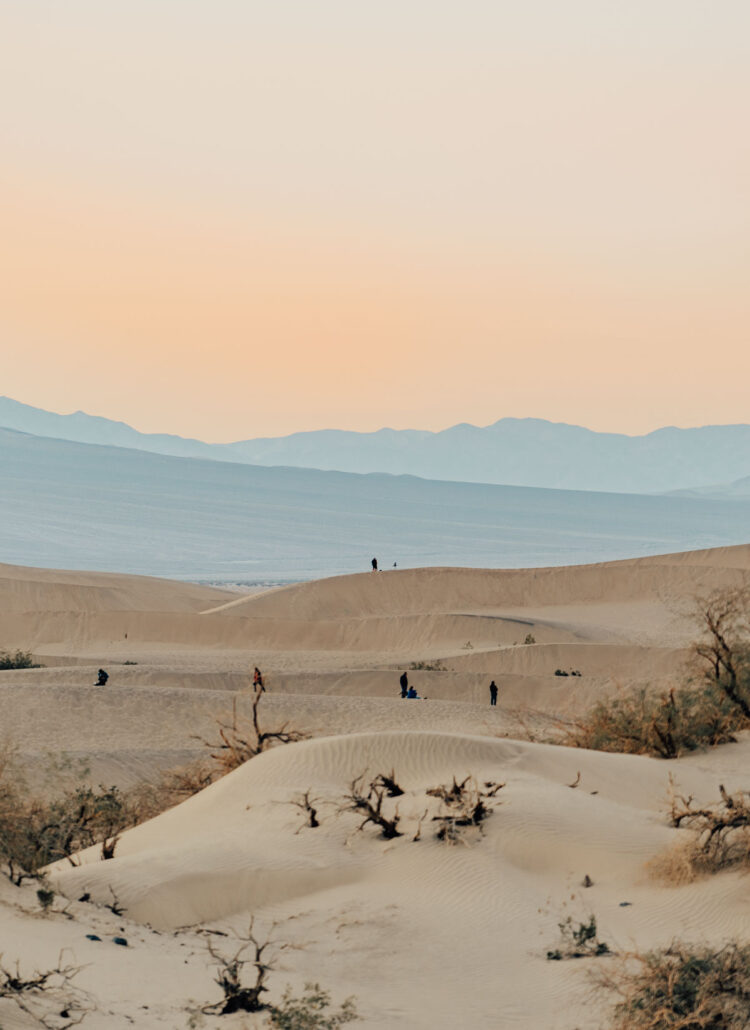
If you want to explore the most accessible dunes in the park without needing 4WD, check out our post on 10 things to see in Death Valley without a 4WD. Mesquite Flat Dunes are a great alternative if you don’t have a 4WD vehicle.
Do the sand dunes really sing?
Yes! When we hiked to the top of the dune field for sunset, we found ourselves perplexed by an unknown sound best described as a mix between howling and humming.
We later learned about this strange phenomena. Turns out it occurs in sand dunes when all the conditions are perfect (think wind) – the sand “sings” how cool is that?!
No one knows exactly why this occurs, the best assumption is the noise is caused by the friction of smooth sand grains sliding against each other. Eureka Dunes is one of only a handful of dune fields in the world where this phenomenon has been documented. We felt pretty lucky to experience it firsthand.
Further reading
- 17+ Best Things to Do in Death Valley National Park
- The 10 Best Hikes in Death Valley National Park
- Visiting Death Valley With 4WD
- Visiting Death Valley Without 4WD
Until next time!
Antonina

Leave a Reply