I avoided Porto on purpose for about four years, and the reason is not flattering. I had already decided Lisbon was my Portuguese city, I had written a lot of words saying so, and some small stubborn part of me did not want a second city complicating a settled opinion.
In This Post
Then my husband and I finally went, in winter, in the exact season every guide tells you to skip. I packed a trench coat and white sneakers like a woman with a Pinterest board and no barometer. Both were ruined by day two.
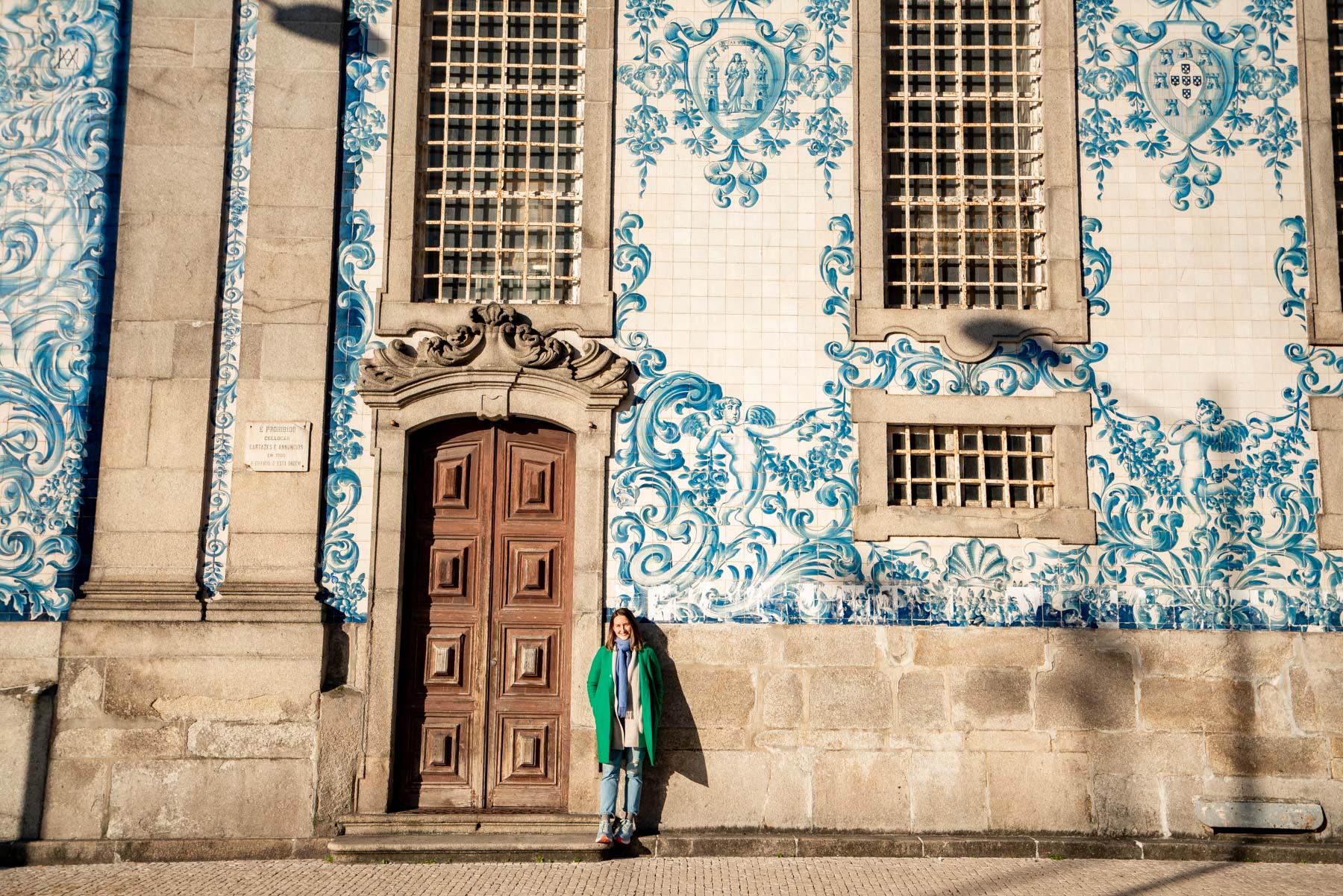
I still think about that trip more than I think about half my summer ones. Porto in the cold months is a different proposition from Porto in July, and the case for it is not the case you will read anywhere else, so here is the version with the actual numbers in it.
What December Actually Does Up Here
Start with the number that decides your trip. Porto Airport’s 1991 to 2020 normals give December an average of 153.3 millimetres of rain spread across 12.4 rainy days. Twelve of them. July, for comparison, gets 16.6 millimetres across 3.1 days. You are not looking at a drier version of summer. You are looking at roughly ten times the water.
November is worse still at 165.9 millimetres, and January is right there with December at 151.0. This is the Atlantic edge of Iberia and it behaves like it. Bring the real coat.
The temperature is the good news. December averages a daily high of 14.7C and a low of 7.6C, which is mild by any northern European standard and genuinely pleasant between showers. Nothing freezes. You will not need snow boots, you will need waterproof ones, and there is a difference.
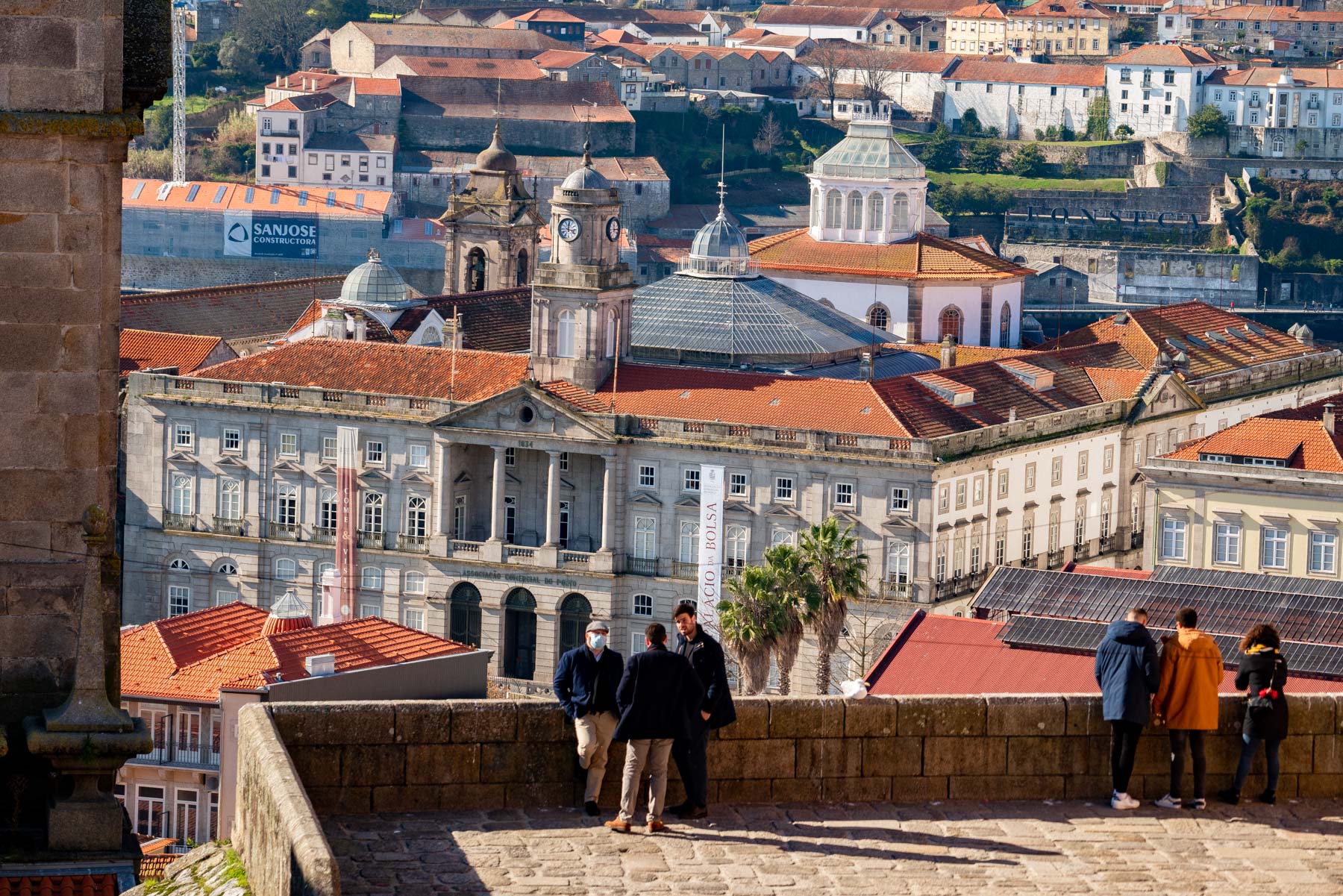
Daylight is short but not brutal. On the solstice, December 21, 2026, the sun comes up over Porto at 7.54am and goes down at 5.10pm, which gives you 9 hours and 15 minutes. Portugal runs on UTC in winter, so the afternoon light holds a little later than it does at the same latitude in Spain or France. Plan your outdoor hours for the middle of the day and put the indoor list in the late afternoon, which is what the rest of this post is organised around.
The Port Lodges Are the Reason to Come in Winter
Here is the structural fact that makes Porto a cold-weather city. The grapes grow up the Douro, but the wine has always been aged across the river in the Vila Nova de Gaia lodges, and until 1986 port could legally be exported from Portugal only from Vila Nova de Gaia. That is why an entire hillside of dark, cool, low-ceilinged warehouses sits directly opposite the old town, thirty minutes of walking from wherever you are staying.
Walking into one in December is like stepping into a cupboard that has been quietly working since before your grandmother was born. It smells of wet oak and sugar. It is about ten degrees colder than the street feels and somehow warmer, and then somebody hands you a small glass of something at 20 percent alcohol and the whole afternoon changes shape.

Worth knowing before you book. Port is fortified with grape spirit during fermentation and lands between 19 and 22 percent alcohol, so a tasting flight is not a wine tasting and pacing matters. Ruby styles are aged briefly to keep the fruit. Tawny is aged in wood for three years and up and goes nutty and amber. A colheita is a single vintage tawny with a minimum of seven years in barrel. White port exists and is the most underrated thing in the building. Rosé only arrived in 2008, which explains why nobody’s grandfather drinks it.
Order a tawny in December. I will take the argument.
One honest limitation. I tried to verify December opening hours and tour prices for the big lodges on 4 September 2026 and every one of their sites refused an automated read, so I am not printing numbers I could not confirm. Book directly on the lodge’s own site rather than through a reseller, and check the date, because several of them run shorter winter hours and close entirely for a stretch around Christmas.
The Wet Afternoon List
This is the part that makes December workable. Porto has an unusual density of good indoor hours per square mile, and you can build an entire day out of them without feeling like you are hiding.

São Bento station. Roughly 20,000 tiles by Jorge Colaço, who laid his first one on 13 August 1905 and needed eleven years to finish. The station itself opened in 1916. It is free, it is a working station, and on a wet morning it is full of commuters ignoring one of the most beautiful rooms in Europe. Go early, before the tour groups form a semicircle.
Mercado do Bolhão. Open Monday to Friday 8am to 8pm and Saturday 8am to 6pm, closed Sunday, with the restaurant counters running to midnight Monday through Saturday. Eat lunch standing up at a counter. That is the correct way to use it.
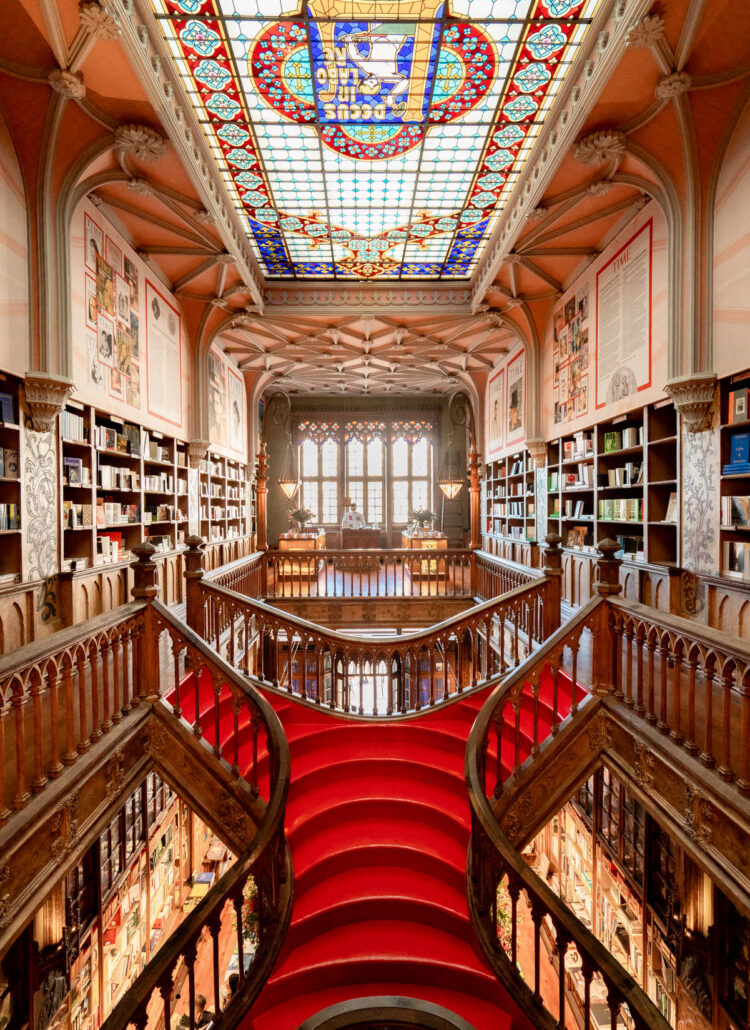
Livraria Lello. Inaugurated in 1906 and charging admission since July 2015, open daily 9am to 7.30pm, and the ticket comes as a voucher you can put toward a book. I could not get a current price out of their site, so check tickets.livrarialello.pt yourself. My unpopular view is that it is a beautiful bookshop with a queue attached, and if the line is out the door in the rain, go at opening or let it go entirely.

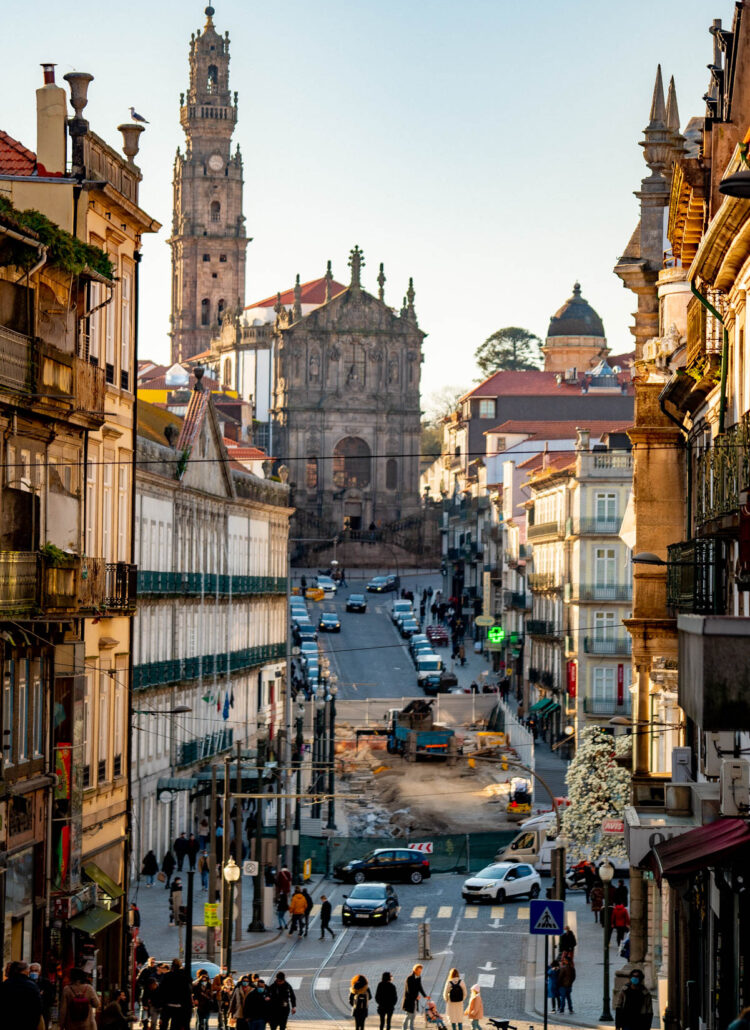
Torre dos Clérigos is open daily 9am to 7pm and there is a night-visit option if you would rather climb it in the dark. The Church of São Francisco, the Igreja do Carmo and the Capela das Almas are all a short walk from each other. Casa da Música and the Serralves museum are both worth a rainy afternoon if you have three days rather than two. I could not confirm current prices for any of those from their own sites this week, so treat every one of them as a check-before-you-go.
If you want the full sightseeing version rather than the winter one, my guide to things to do in Porto and my three-day Porto itinerary cover the whole city.
Eat Like It Is Actually Cold
December is the only time of year when Porto’s food makes complete sense. This is not a light cuisine. It was built for wet Atlantic winters and it tastes wrong in August.
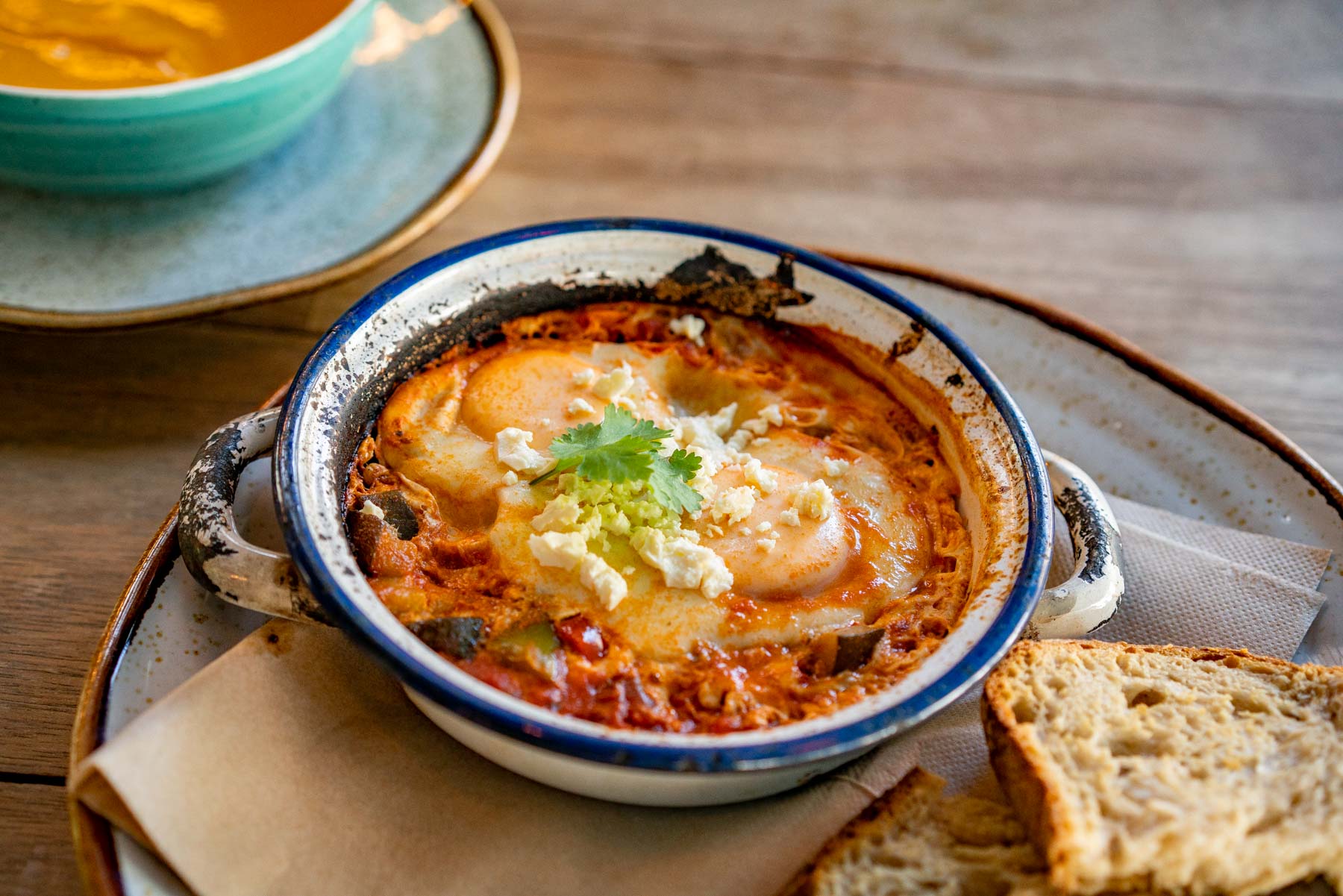
Caldo verde, the kale and potato soup with a coin of chouriço in it, is the single best thing to order on a day when your socks are wet. The francesinha is Porto’s famous sandwich, layered with meat, covered in melted cheese and drowned in a beer and tomato sauce, and I will be straight with you about it. It is enormous, it is not subtle, and one between two people is plenty unless you have skipped a meal on purpose. Tripas à moda do Porto is the dish the city is named for in slang, and locals still call themselves tripeiros because of it. Order it once. You will find out quickly which sort of person you are.
Porto’s brunch scene is better than it has any right to be for a city of 273,476 people, and it is a genuine wet-morning strategy. I ranked my favourites in the Porto brunch guide.
Christmas in Porto, and the Part I Could Not Confirm
I went looking for the 2026 programme so I could give you dates, and on 4 September 2026 there was nothing to find. The official city tourism site had published no lighting date, no market dates and no New Year’s Eve programme for Avenida dos Aliados. That is not a failure of searching, it is how Porto works. The city confirms this material in late autumn, usually from around the start of November.
So rather than invent a schedule, here is what is fixed. Portugal takes 1 December for the Restoration of Independence, 8 December for the Immaculate Conception, 25 December and 1 January, and museums and smaller shops thin out sharply on all four. Porto’s own municipal holiday is 24 June, for São João, which is a summer street party and has nothing to do with your December trip no matter what an aggregator tells you. Check visitporto.travel from early November and buy anything ticketed from the venue rather than a third party.

Porto or Lisbon in December
If you get one Portuguese city in December and you are rain-averse, take Lisbon. It is further south, milder and meaningfully drier, and I laid out that month in detail in Lisbon in December.
Take Porto if what you want out of a winter trip is short walks between warm rooms, better value than anywhere in western Europe at that time of year, and a legitimate excuse to drink fortified wine at three in the afternoon. Porto is also the more compact city on foot, which matters more than people expect when the weather is deciding your itinerary for you. The full head-to-head lives in Lisbon versus Porto.
What I Would Skip in December
The Douro valley day trip. I know it is the headline excursion and I know the photographs are extraordinary, but the terraces are bare in December, the boat timetables run thin, and you will burn most of your 9 hours of daylight on the road. Save it for May or harvest season.
The six bridges river cruise on a grey day. It is fifty minutes on cold water looking at the same bridges you can see for free from the top deck of the Dom Luís I. Walk across instead, then take the cable car or the stairs down into Gaia.

And skip Foz do Douro on a day the forecast is genuinely bad. It is a beautiful seafront walk in decent weather and a miserable one in horizontal Atlantic rain, and there is no shelter out there.
Yes, if you plan around the rain rather than pretending it is not coming. December averages 153.3 mm of rain over 12.4 rainy days in the 1991 to 2020 Porto Airport normals, but temperatures stay mild at an average high of 14.7C and a low of 7.6C. Prices and crowds are at their lowest, and the port lodges, markets and tiled churches are all indoor.
Not very. The 1991 to 2020 normals put the December average daily high at 14.7C and the average low at 7.6C. Nothing freezes. The problem in Porto is water rather than cold, so waterproof shoes and a proper rain jacket matter far more than a heavy coat.
About nine and a quarter. On the solstice, December 21, 2026, the sun rises in Porto at 7.54am and sets at 5.10pm, which is 9 hours and 15 minutes. Portugal runs on UTC through the winter, so afternoons hold their light slightly later than at the same latitude further east.
Porto lights the city and runs Christmas events every year, but as of early September 2026 no 2026 dates had been published by the official city tourism site. Porto confirms its lighting, market and New Year programme in late autumn, usually from around the start of November. Check visitporto.travel then rather than trusting a date copied from last year.
Lisbon if you want the driest and mildest option, since it sits further south. Porto if you want lower prices, a more compact city on foot and the port lodges across the river in Vila Nova de Gaia, which are the best indoor hours in Portugal in winter.
One thing, and then I will let you go. Look at the forecast the night you arrive, find the wettest afternoon of your trip, and book a port lodge tasting into it right then. Do not save it for a nice day. A nice day in Porto in December is for walking. That hillside of dark warm warehouses exists to turn the worst weather of your week into the best three hours of it.
Cheers!
Antonina


Leave a Reply