The first time my husband and I walked into Dubrovnik’s Old Town, it was a July afternoon and I genuinely could not move. Not in an awe-struck, hand-on-heart way. In a there-are-nine-hundred-people-on-this-staircase-and-none-of-us-are-going-anywhere way. Somebody’s selfie stick was in my ear. A tour guide with a numbered paddle was shouting over another tour guide with a numbered paddle. I remember thinking, so this is the most beautiful walled city in the Mediterranean, and I want to leave.
In This Post

Then we came back in October. Same city. Empty walls, gold light, a cat asleep on a warm limestone step. I had the whole rampart nearly to myself at 4pm.
So is Dubrovnik worth visiting? My honest answer, after two very different trips. Yes. Completely. But the visit you get depends almost entirely on two decisions you make before you ever pack a bag. When you go, and where you sleep. Get those right and it’s one of the best places in Europe. Get them wrong and you’ll spend a lot of money to shuffle through a theme park.
Let me walk you through both versions.

The Dubrovnik the cruise brochures leave out
Here’s the math that ruins peak season. Dubrovnik’s Old Town has roughly 1,800 permanent residents inside the walls. On a big cruise day, the city can take two ships and up to 4,500 arriving passengers, and that’s on top of the day-trippers driving down the coast and everyone already staying nearby. The city only started capping cruise traffic at all after UNESCO threatened to put the walled town on its “in danger” list. That’s how bad it had gotten.
You feel that math in your body. Stradun, the polished main drag, becomes a slow-moving river of people between about 10am and 4pm in July and August. The famous City Walls walk, which is genuinely one of the great urban experiences anywhere, turns into a single-file conga line where you can’t stop for a photo without holding up forty strangers. And it is hot. Really hot. There’s very little shade up on those ramparts.
I’m not saying this to be dramatic. I loved Dubrovnik on both trips. But I would feel dishonest telling you it’s magical without telling you that midday in high summer it can be miserable, and that a lot of people fly all this way, hit the walls at noon in August, and leave thinking the whole thing was overrated. They weren’t wrong about what they saw. They just saw it at the worst possible hour.

October changed my whole opinion
The October trip is the one that made me a believer. And the numbers explain why. October highs sit around 20C (68F), lows around 13C, with something like seven or eight hours of sun on a good day. The Adriatic still holds around 21C (70F), which sounds cold and honestly felt swimmable to me for a quick, bracing dip off the rocks. Fair warning though, my husband thought I was insane and stayed dry.
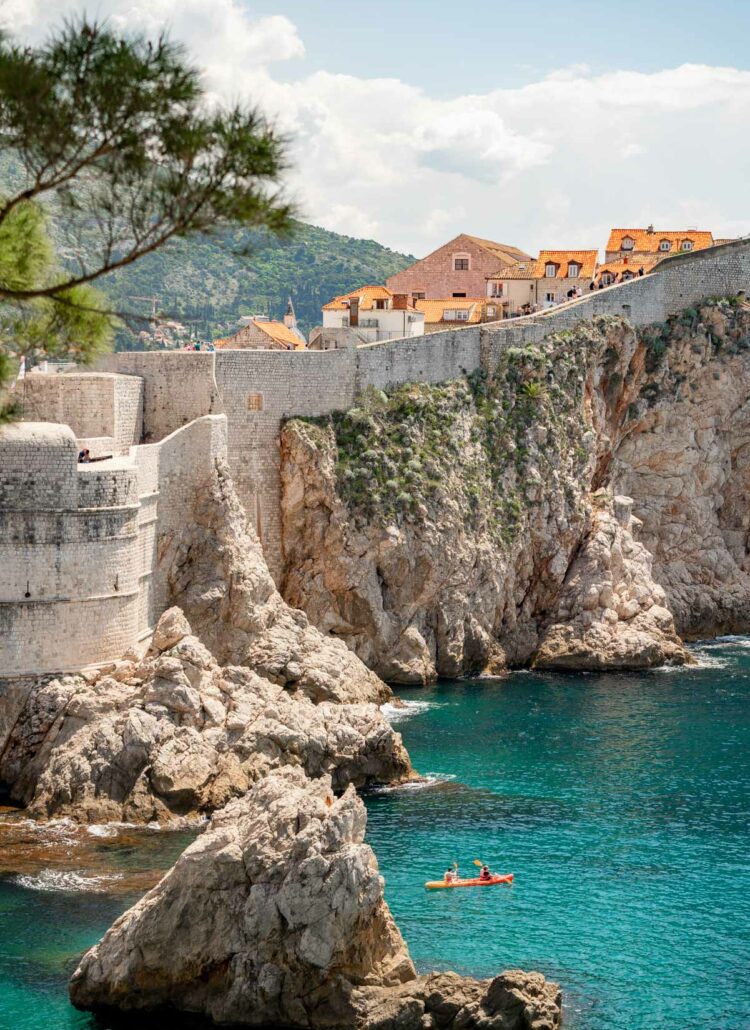
But the real gift of October isn’t the weather. It’s the space. The cruise season tapers, the tour groups thin out, and the stone streets finally belong to whoever is standing on them. We walked the entire two-kilometer circuit of the walls in the late afternoon and stopped whenever we wanted. We had time to actually look. The way the orange-tiled rooftops step down to that impossible blue. The little fishing coves outside the walls where a couple of dinghies bob and almost nobody bothers to walk. That’s the Dubrovnik on the postcards. It exists. You just have to show up when the crowd doesn’t.
If you can only go in July or August, don’t panic. The trick is simply the clock. The Old Town is nearly empty before 9am and it opens up again after about 4pm once the day-trippers and cruise passengers head back to their ships. So walk the walls at opening, nap or swim through the ugly midday hours, and let the evening be your reward. I know 8am on vacation is a big ask. Do it anyway.
One small October caveat, because I promised you honesty. It’s the start of the rainier stretch, so you might catch a grey afternoon or a proper downpour. We got one. We ducked into a tiny cellar wine bar off a side lane, waited it out with a glass of Croatian red, and it became my favorite hour of the whole trip. So even the downside came with a silver lining. Just pack a light rain layer and don’t build your entire plan around perfect blue skies.

Where you sleep matters more than you think
This is the decision people underweight, and it quietly decides half of how much you’ll love the place.
Staying inside the Old Town walls is romantic and I understand the pull. Waking up in a stone apartment older than most countries is a real thrill. But be clear-eyed about the trade. Those lanes are stairs, then more stairs, then a few surprise stairs. No cars come to your door, so you’re hauling your own luggage up medieval staircases in the heat. And the noise carries. Bars, wheeled suitcases at 2am, the general hum of a place that’s essentially a living museum. Light sleepers, take note.
On our second trip we based ourselves just outside the walls, up the hill toward the Ploce side, in a small guesthouse with a terrace looking straight down onto the rooftops and the sea. Quieter, cheaper, and that view at breakfast is one I still think about. The walk down into the Old Town took maybe ten minutes. The walk back up was a workout, which I decided to call a feature. The lesson we learned the hard way on trip one, and I’ll pass it to you free: pick your neighborhood before you pick your apartment.

What’s actually worth your time inside the walls
The City Walls are the whole reason to come, so do them right. The full loop runs about two kilometers and takes most people an hour and a half if you stop for photos. In high season the adult ticket runs somewhere around €35 to €40, and it drops to roughly €15 in the quiet winter months. It also covers Fort Lovrijenac, the dramatic sea fortress on its own rock just outside the walls, so use it. Buy from the official seller, the Society of Friends of Dubrovnik Antiquities, not from a random reseller charging a premium. Go clockwise, go early or late, and bring water and a hat because there is almost no shade up there.
Beyond the walls, my honest short list. The cable car up to Mount Srd is the single best-value splurge in town. It’s around €30 round-trip for an adult, and the view from the top down onto the walled city with the sea wrapping around it is the one that finally makes the whole trip click. Go near sunset if you can. Just check it’s running, because it typically operates April through October and shuts down over the deep winter.
For a drink, find Buza. It’s a bar built into a literal hole in the sea-facing wall, a few plastic tables clinging to the cliff over the Adriatic, and they serve cold beer and wine and not much else. No cocktails, no food, no fuss. Just you, a drink, and the open sea a few meters below. One catch worth knowing: it’s a warm-weather spot, so if you come in the shoulder or off-season it may not be open. When it is, it’s my favorite twenty minutes in the city.

The Game of Thrones thing, honestly
Dubrovnik was King’s Landing, and the show is still a big part of why people come. I’ll be straight with you about whether it’s worth caring about.
If you loved the show, yes, it’s a genuine kick to stand where it was filmed. The Jesuit Stairs, that grand baroque staircase up from Gundulic Square, are where Cersei began her Walk of Shame, and it’s an oddly moving spot even now. Fort Lovrijenac stood in for the Red Keep. The wall walk itself doubles as the ramparts of the capital. Standing in these places, the scale of the show suddenly makes sense in a way a screen never conveys.
If you never watched a single episode, don’t force it. The city is spectacular entirely on its own terms, and you won’t miss a thing by skipping the fan pilgrimage. We wrote a whole separate piece on the specific filming spots for the fans among you, but I’d never tell a non-fan it’s essential. It isn’t.

What you can skip. And why.
A few honest cuts. The overpriced restaurants right on Stradun and around the main gates are trading on location, not cooking. Walk two or three lanes off the main artery and you’ll eat better for less. The parade of identical souvenir shops selling the same magnets and “Iron Throne” trinkets, skip entirely. And I’d gently push back on the instinct to cram Dubrovnik into a single day-trip from a cruise or a base up the coast. A day gives you the crowds and none of the quiet. This is a morning-and-evening city, and you need to sleep here to get the good hours.

So who is Dubrovnik actually for?
After two trips, here’s my clean answer. Dubrovnik is absolutely worth visiting if you’re willing to be a little strategic about it. Come in the shoulder season if you possibly can, ideally late spring or October. If you’re locked into high summer, own the early mornings and late afternoons and write off the middle of the day. Sleep just outside the walls or, if you’re inside, make peace with the stairs and the noise. Give it at least two nights. Do that, and you’ll walk those golden ramparts at the right hour and understand exactly why people lose their heads over this place.
Show up unprepared at noon in August with a cruise-ship crowd and one afternoon on the clock, and you’ll wonder what the fuss was about. Both Dubroviks are real. You get to choose which one you visit.
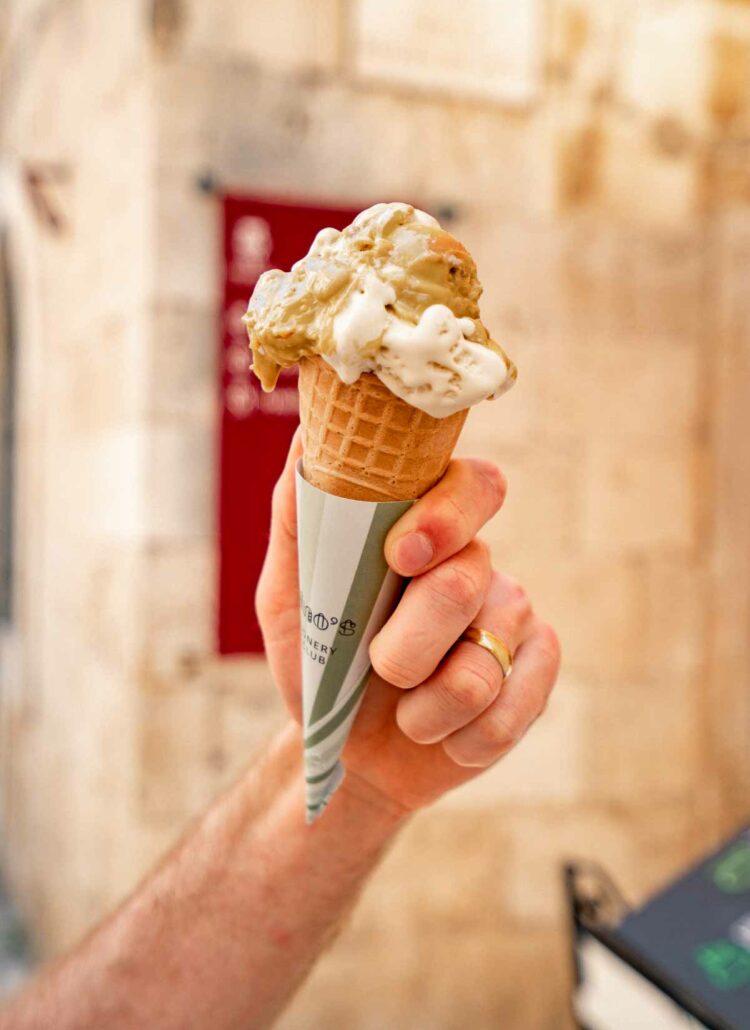
We chose the quiet one the second time, and it has stayed with me. If you’re planning a Croatia trip and want more on making Dubrovnik work, I’ve got you covered on the best things to do in the Old Town, a full guide to the easy boat trip out to Lokrum Island for a half-day escape from the crowds, and even where to find the gelato actually worth the calories. Fans should absolutely read up on the Game of Thrones filming locations before you go.
Cheers!
Antonina

Leave a Reply